Details
How the Wheelie Bin Compost Toilet works...?
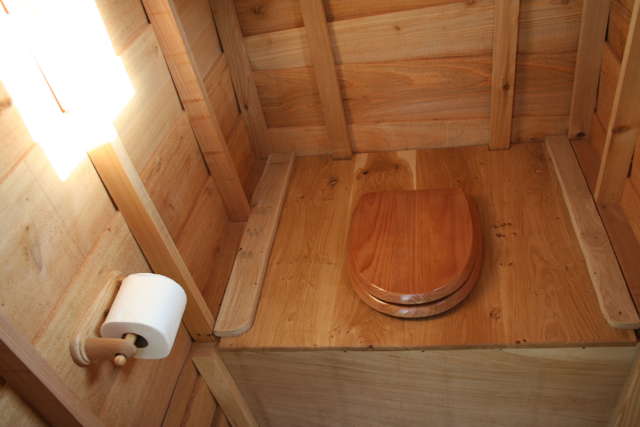
Here at Freerange Designs, we've been scratching our heads for a while over how to design and make a compost toilet that fits in with peoples' lives, and is simple to use and maintain. Well, after quite a few cups of tea and some scribbling we came can up with a design that uses the ubiquitous wheelie bin in order to save and store human manure for composting.
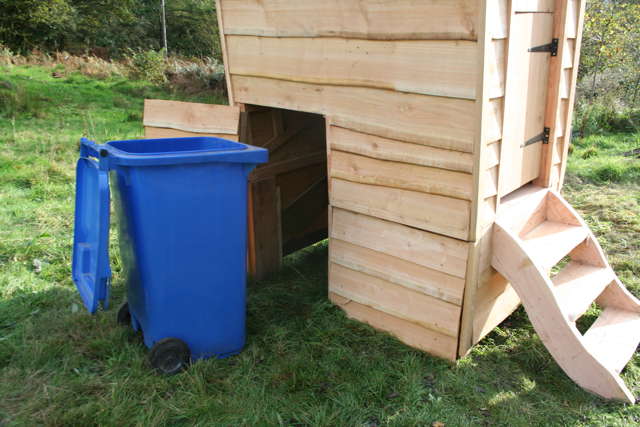
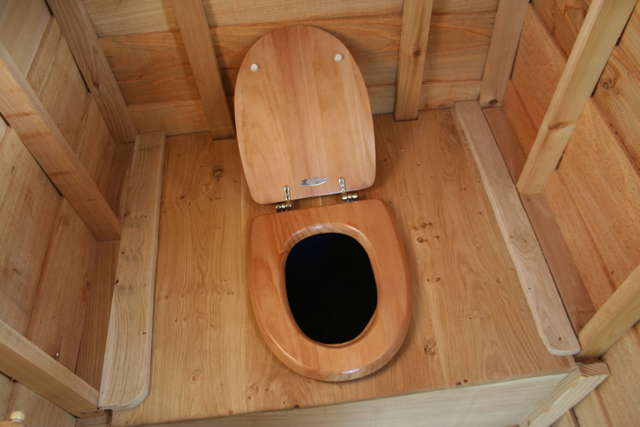
The wheelie bin sits in the composting chamber beneath the toilet seat, collecting the precious manure until the day comes when it is full. Simply remove the side panel of the toilet structure, reach in and wheel out the bin with the lid shut. Replace with a fresh bin and leave the old one to sit for a while. We recommend sealing the lid shut with duct tape and sticking a sign on the bin. After a year of sitting, your compost should be ready to use on your garden or allotment.
This system uses two standard 200 litre household rubbish wheelie bins, one “live” bin for collecting humanure and the other for resting while the contents breakdown to form rich compost. Once a bin has been stored for about a year, all the pathogens have been destroyed and the compost inside is safe to handle.
The Gypsy Caravan Compost Toilet is sold without the bins, but they can be purchased separately at £60 each.
Urine Separator
Keeping urine separate is usually the key to a successful composting toilet. The Gypsy Compost Toilet comes with a wee separator, which diverts the urine into a separate container. This keeps the solids waste odour free and optimises the composting process.
For the composting process to work aerobically, moisture levels need to be controlled: too dry, and the mass decomposes slowly or not at all; too wet and anaerobic organisms thrive, creating undesirable smells. As urine is high in nitrogen, potassium and phosphorus, when it is collected separately it can be used as a fertiliser (on nonfood plants) when mixed about 1:10 in water.
Soak
A ‘soak’ is a source of carbon, like sawdust, straw, hay, shredded paper or earth. Addition of the right amount of soak is important for good decomposition because bacteria like to eat a balanced diet of carbon and nitrogen. Human waste contains a lot of nitrogen so a good amount of carboniferous material is needed to avoid the bacteria giving off excess nitrogen in the form of ammonia, which is what is smelly. As well as absorbing liquid, the soak also allows oxygen into the pile, so it can decompose aerobically, to produce nitrates, phosphates and sulphates – very useful. Without a soak, the pile will decompose anaerobically and produce methane, ammonia and hydrogen sulphide – all smelly and not very useful.
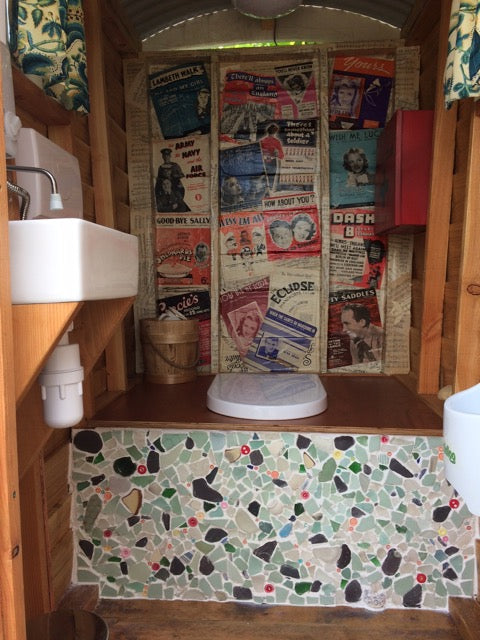
So you just need to keep a bucket of soak next to the loo and drop a handful into the toilet after each use.
The Beauty of the Compost Toilet
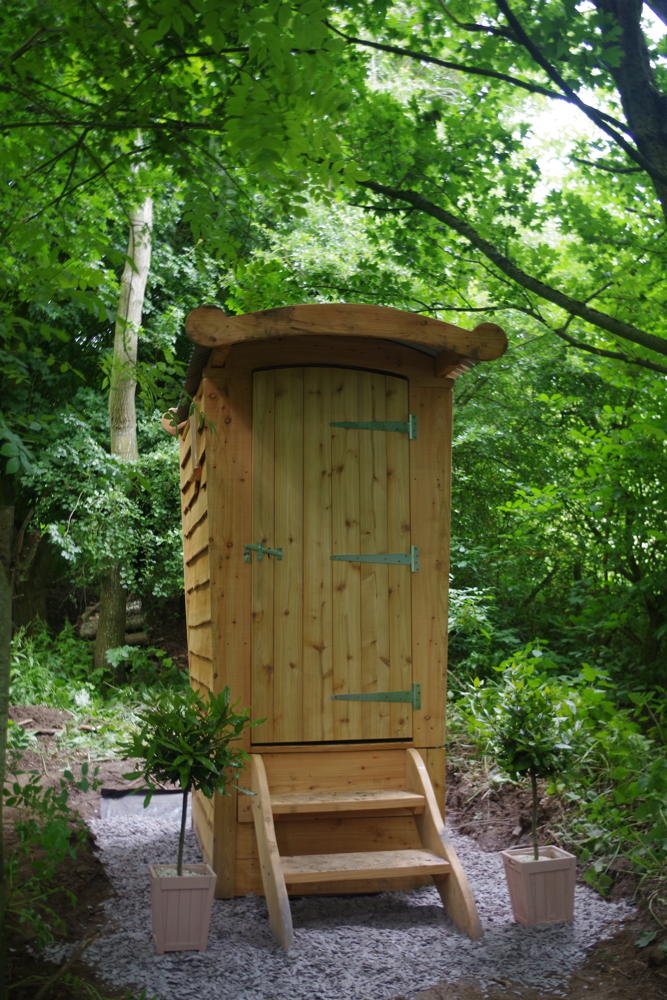
The perfect alternative to sewers and septic tanks: this beautiful bog is an ideal solution for people looking to reduce their impact on the environment and make lovely usable compost. The Gypsy Compost Toilet offers the following environmental benefits: it's chemical free; all wastes are dealt with aerobically on site, so there are no CO2 emissions from anaerobic decomposition or waste transportation; it saves precious (often drinking water standard) water; valuable organic matter can return to the soil where it belongs, improving soil structure and nutrition; no electricity is needed to run it.
Tips to Improve your Compost
Add a handful of worms at the bottom of your wheelie bin and again periodically as the bin fills up.
To stop a ‘peak’ developing, it may have to be knocked down every couple of months.
*Human pathogens don’t like conditions outside the human body, so almost all will be dead after a few hours. Only one type of roundworm egg can survive a year-long decomposition period, but even though it is a tiny risk, we recommend using the compost on fruit trees and bushes, not the vegetable garden.
Installation
We believe in the value of compost toilets and would like to see them everywhere. Our mission is to make the purchase and installation of a compost toilet as simple and inexpensive as possible. We have experience of building site-built composting toilets but have identified a need for a flat-pack version that we can send out to customers anywhere, which will not require site-specific design or professional installation, and therefore be much more affordable.
This compost toilet can be palleted and delivered in two separate sections that can be installed anywhere on your property.
Perfect composting toilets for campsites and compost toilets for allotments.
Delivery is included in the price for most parts of the UK.
Useful Links
www.wheeliebinwarehouse.com
http://www.lowimpact.org/factsheet_compost_toilets.htm
http://www.composttoilet.org.uk/
-
-
- Q. Why should I choose a compost toilet?
A.No Water, no smell, no electricity and beautifully usefull compost in 1 years time.
- Q. Will a Freerange composting toilet smell?
A. No. We have never had any feedback from customers or guests about smelly toilets.
- Q. How is the toilet delivered?
A. Each toilet is designed to fit onto one standard UK pallet. The toilet comes in three easy to assemble parts(base, toilet, roof) All that is needed on your side is a cordless screwdriver. Installation should take no longer than 30min.
- Q. What do I need for assembly?
A. All that is needed on your side is a cordless screwdriver. Installation should take no longer than 30min.
- Q. Does anything have to be added to the toilet?
A. Yes, a handfull of sawdust must be used
- Q. Why urine separation?
A. Separating the urine from the solids, is the trick to having odourless compost. Keeping the solids dry, helps with the anerobic composting process. the urine is then kept in drums which can be diluted and used straight on the veg patch.
- Q. How long does it take before I can use the compost?
A. Like fine wine, the longer you leave compost the better the product. It is best to leave human manure for a year or two before using it on veg. The nasty diseases carried in poo (Salmonella etc.) will die within a year of being composted. Threadworms can live for up to 18 months, but they are hardly life threatening.
- Q. What foundations are required?
A. All the toilets are designed to be free standing and self supporting, so should not need any slabbing for stability. I would however recommend using loose slabs to raise the wood to prolong the toilets life.
- Q. How long does it take to fill one wheelie bin?
A. It depends on the situation. A household of 5 people will fill up a bin in 6 months time. The good people from Milkwood have calculated that it takes 150 person days to fill a standard wheelie bin – so one person with a normal digestion would take about 150 days to fill a single bin by themselves (and 6 people would take 25 days to fill a single bin, and so on). Using this rough guide we can now plan ahead for when we need to modify more bins. It will be good in the second year of this system, when we start to re-use the cleaned bins, but we ain’t there yet!
- Q. Is it possible to have a double chamber toilet?
A. Freerangedesigns can also build a compost toilet with two chambers, email us for more details.
- Q. Do the toilet buildings come supplied with a light?
A. No, but solar fairy lights are easy to install and work really well.
- Q. Can a sink be plumbed in?
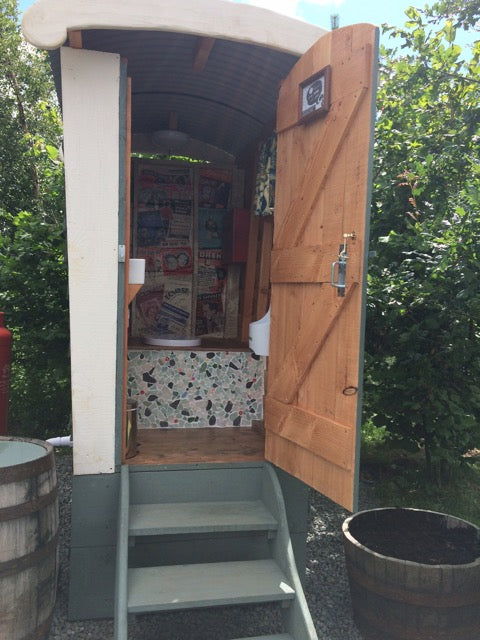
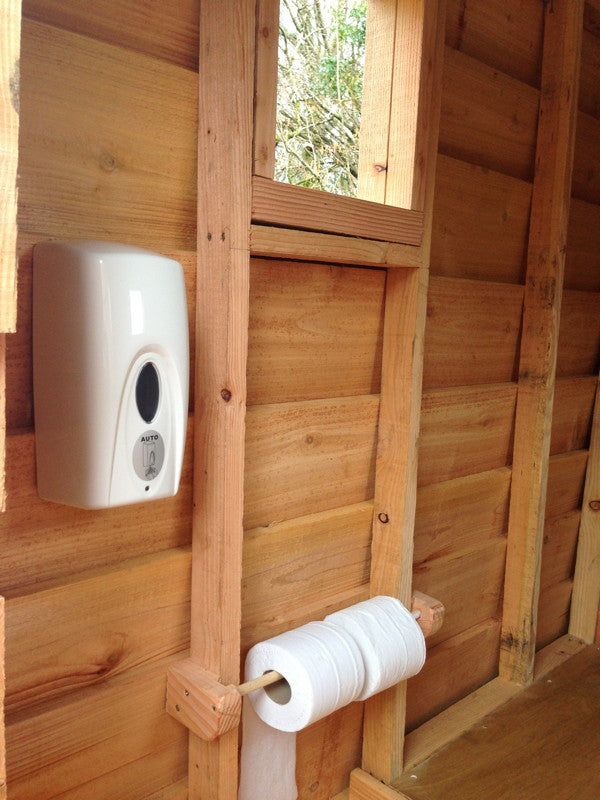
A. Yes, there is a space for a sink to be plumbed in. We can supply a sink but you would have to connect the water supply.
- Q. Are flies a problem with composting toilets?
A. We would be suspicious of any manufacturer of a genuine composting toilet who claimed they had never had flies in one of their composting toilets. There are a large number of dung fly species in the UK and due to their small size they can fairly easily find their way into a toilet vault. However, we are pleased to report that a recent survey of our toilets did not reveal any problems with flies. Our research has also demonstrated that should they occur the problem can be resolved by a change in the management regime. The most likely cause is due to high moisture content in the vault and this may be caused by failure to clean the urine separating system. To a large extent fly larvae will be eaten by other small predators in the compost pile. However, we cannot completely guarantee fly free performance due to the complex nature of composting processes. Dung flies are not likely to act as disease vectors because they are not usually attracted to food.
- Q. What the heck is a composting toilet?
A.Composting toilets use rapid aerobic decomposition, like a well-turned garden compost pile, to break down wastes. More than 95% of the material that goes into the composter disappears up the vent as water vapor or gases.
- Q. What must I do with the compost in the wheelie bin?
A. The compost should be used or disposed of in accordance with Environment Agency and/or Local Authority guidelines or, in the absence of any official advice, further composting can be carried out in a dedicated composting facility on site before eventual use or disposal. You should not assume that it is completely free of disease causing organisms. Some human parasite eggs can survive for many years in compost and although these are generally only found in tropical or sub-tropical populations we advise against using finished compost on food crops. We will provide further advice if you purchase one of our toilets.
- Q. What are the compost toilets made from?
A. All our toilets are made from locally sourced timber, either larch, douglas fir or cedar.
- Q. Can the toilets be made with wheelchair access
A. Yes, we can design a ramp that meets UK regulations.
- Q. Do I need planning or building control approval?
A. It is often necessary to have planning and building control approval from the local authority before installing composting toilets. Although the responsibility for acquiring these consents rests with you, the client, we are happy to assist in acquiring them and have considerable experience in so doing. No local authority has so far refused. Representatives from the Building Research Establishment inspected several NatSol toilets to assist them in eventually determining appropriate standards and regulations for composting toilet installations.
- Q. Why should I choose a compost toilet?
If we have not answered any of your questions then this is the place to go http://humanurehandbook.com/contents.html Everyhing is covered on this one site.
-
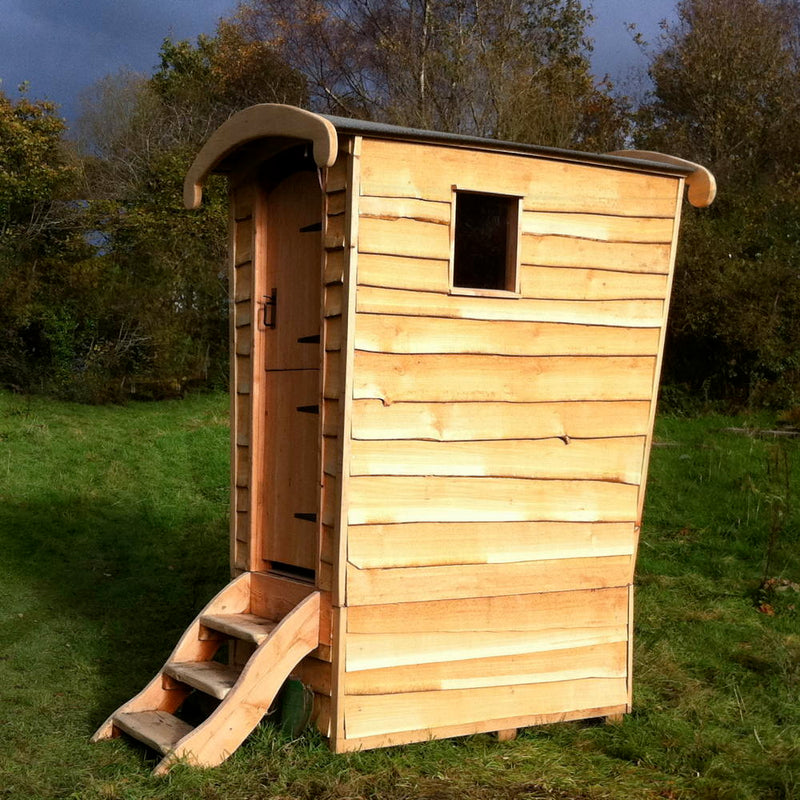
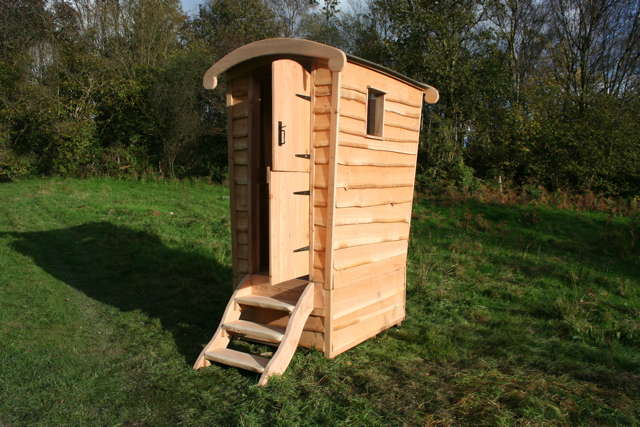
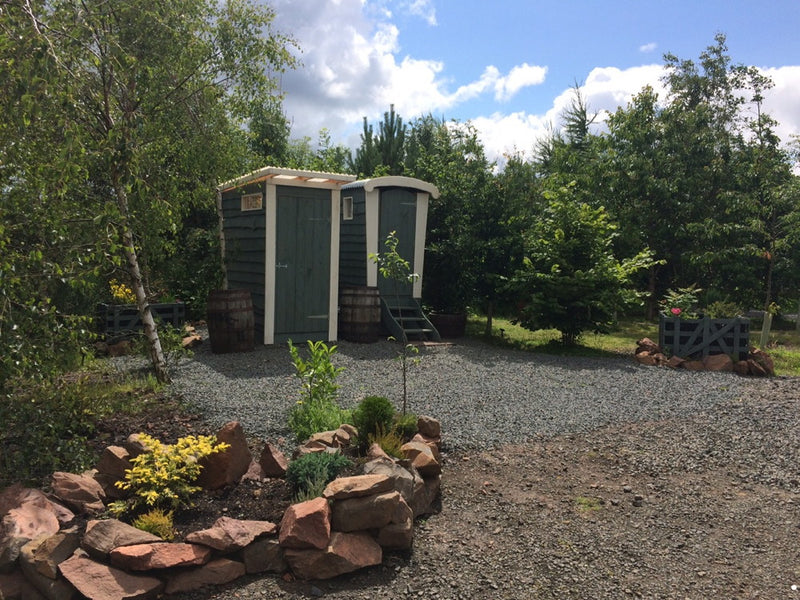
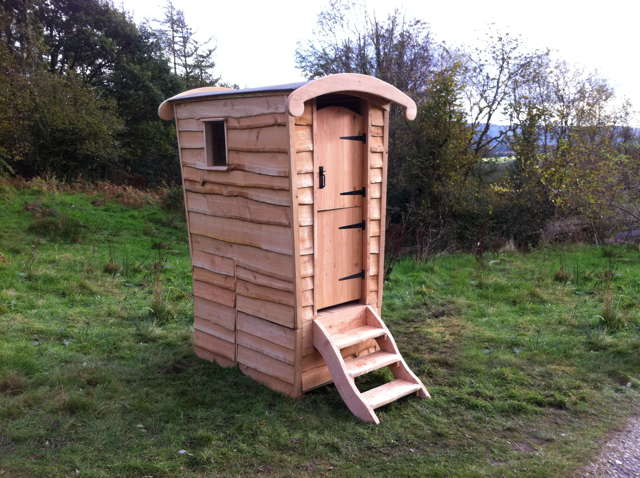
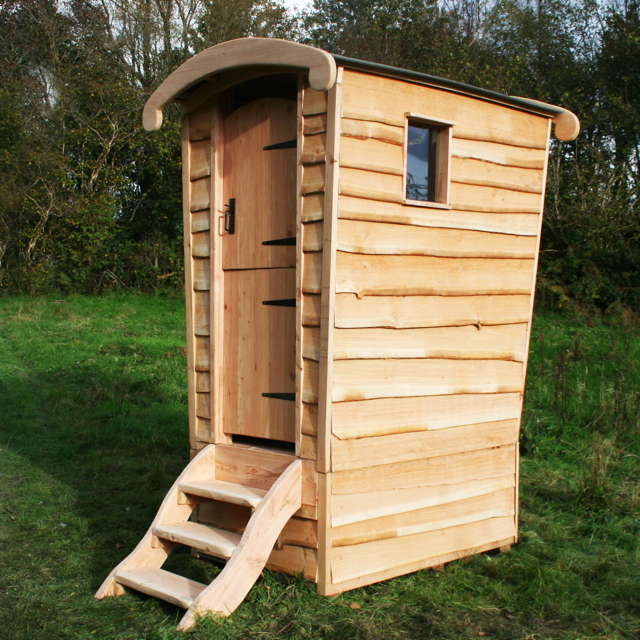
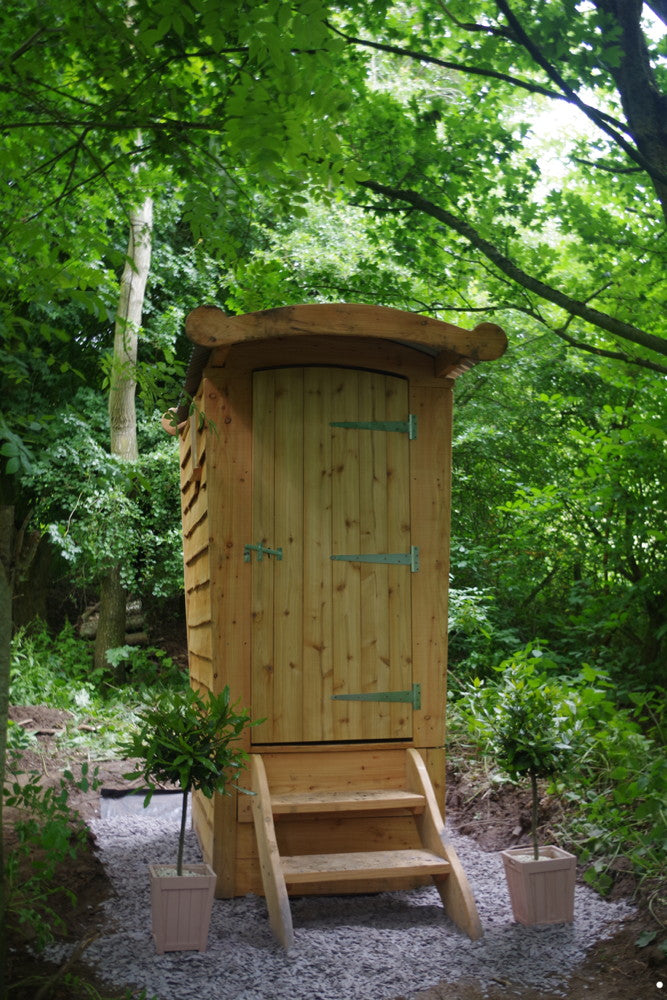
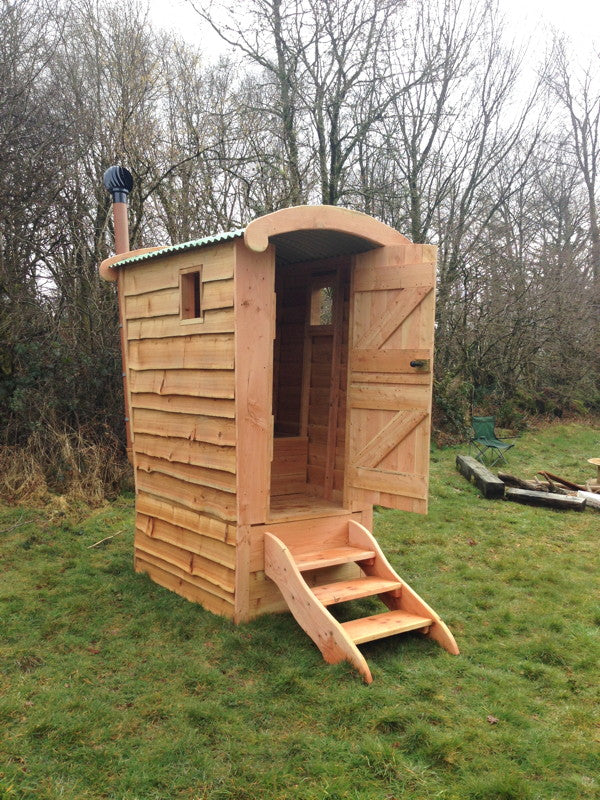
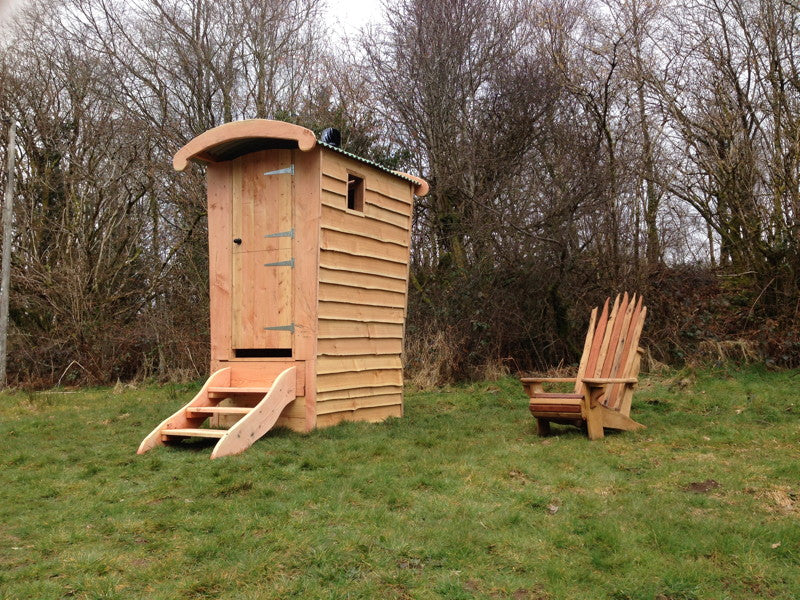
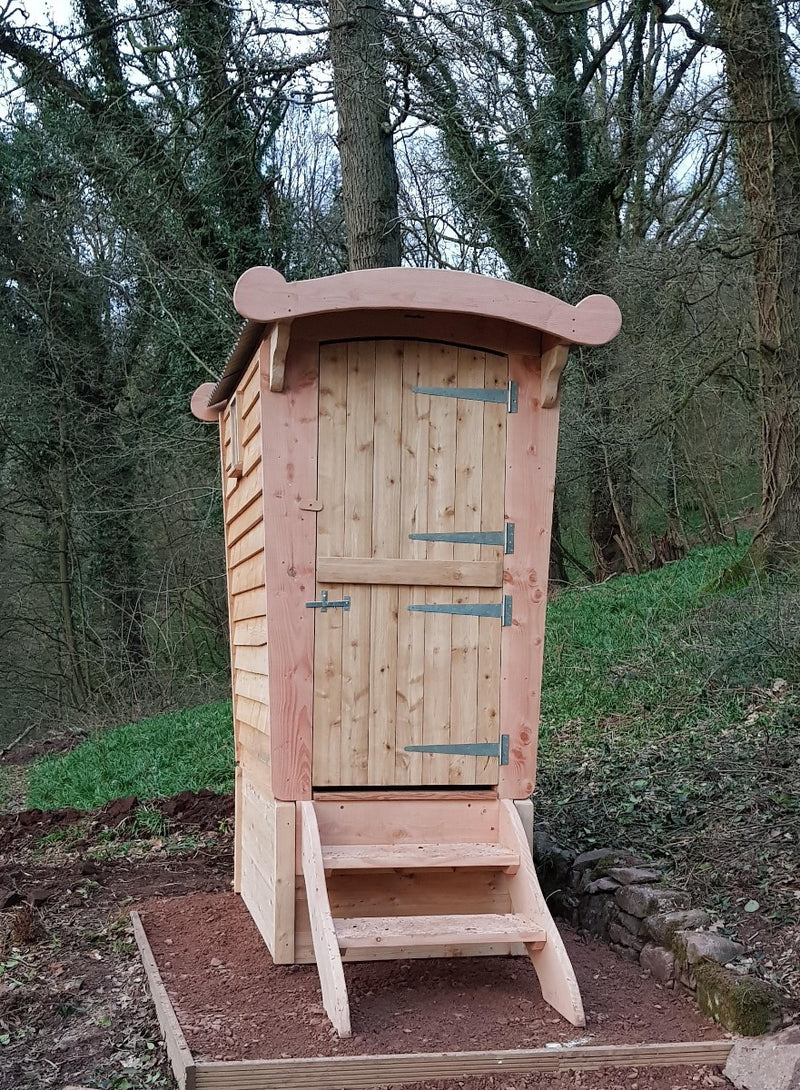
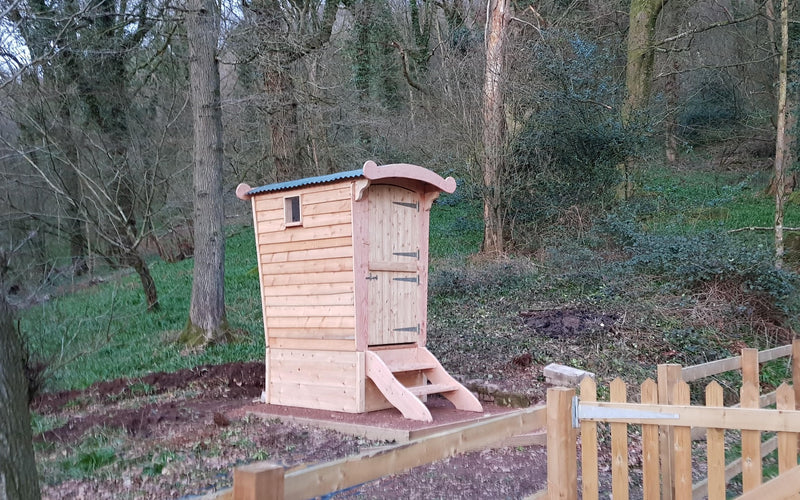
The gypsy caravan compost toilet measures are:
Width : 1.2 m
Length : 1,6 m
Total Height : 2.6 m
Base Height : 60 cm
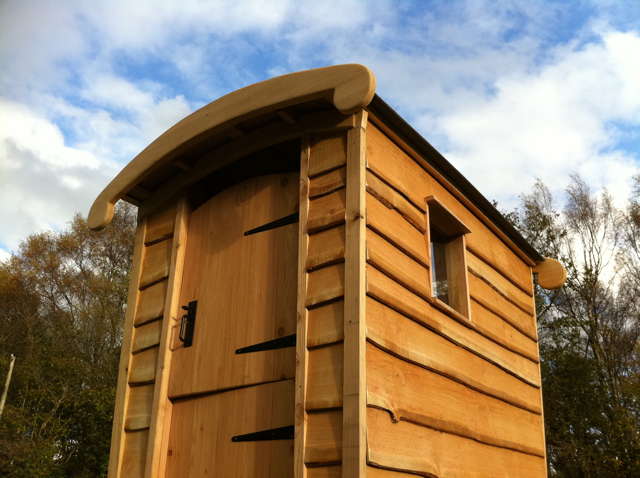
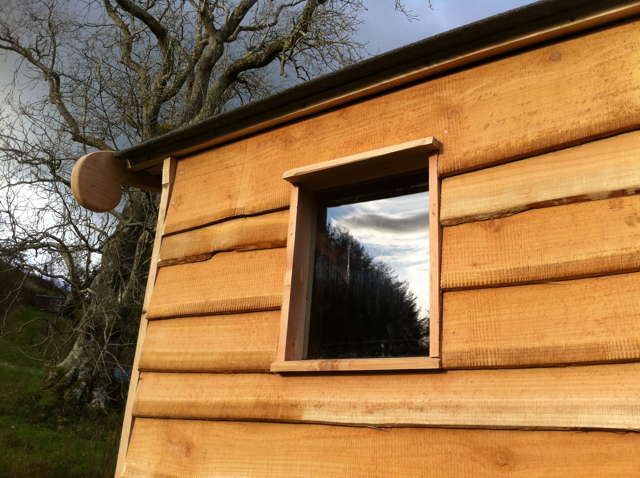
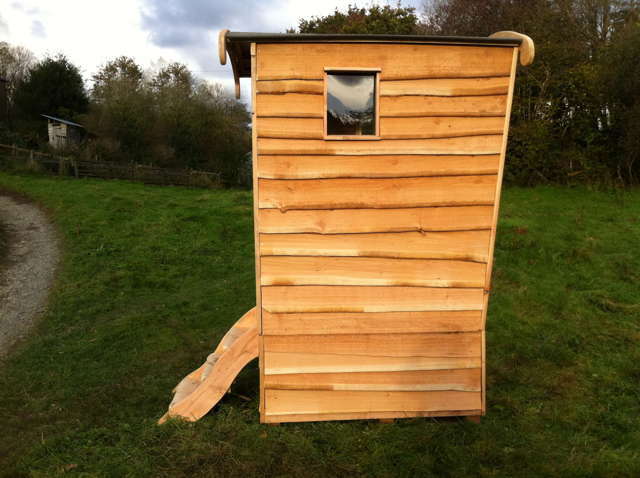
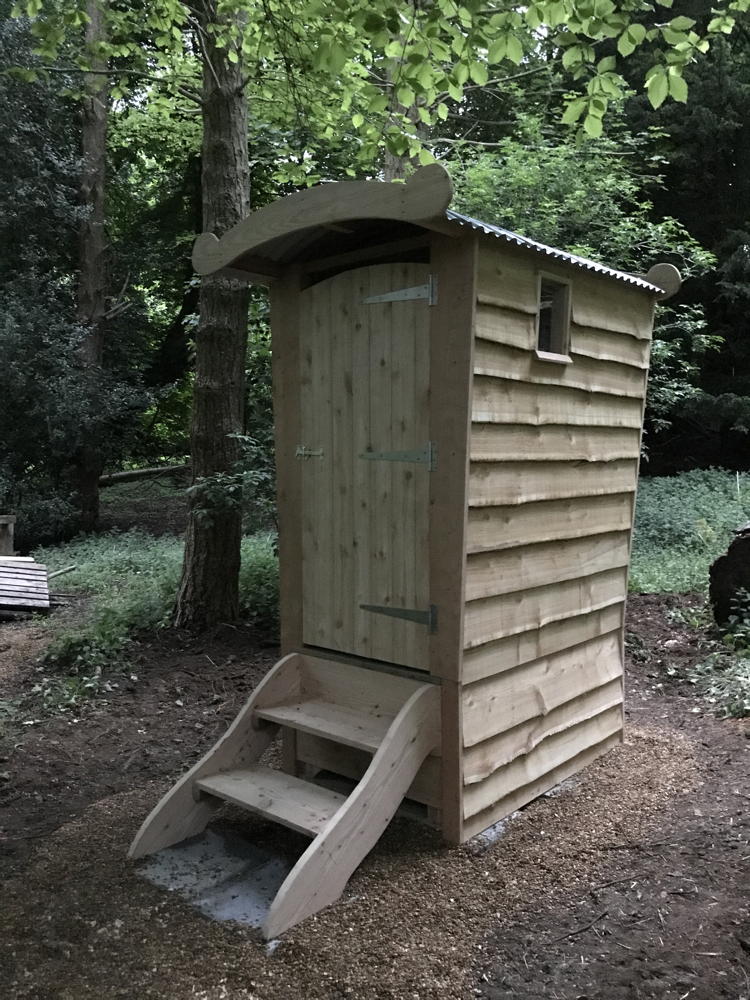
Choose between ship lap or waney edge cladding.

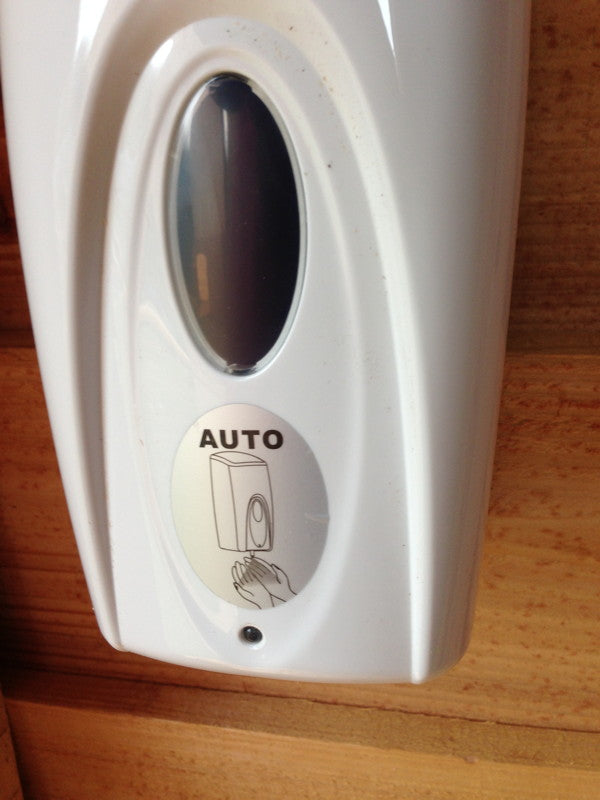
Hand Sanitiser
We reccomed the Purell hand dispenser for waterless hand hygine.brand. Purell is also antiviral so is effective as a normal hand sanitiser plus is also effective against virus's, such as Noro Virus and the H1N1 Influenza A virus
Wall mounted, touch free dispensing system minimises the risk of cross infection
Suitable for use with PURELL Gel and Foam sanitiser cartridges
Unit conducts regular battery checks and features an LED to indicate when battery is low. Alcohol based formula kills 99.99% of most common germs, viruses and pathogens in as little as 15 seconds. Gel refill provides 1000 applciations
Turf roof
Turf is the obvious roofing material for a natural compost toilet.
We are currently build a client one with tuf and wil post pictures once complete.
Fairy Lights
Who could resist abit of bling with a set of solar fairty lights to go with the compost toilets.
You may also be interested in the following product(s)
240 Litre Wheelie Bin
£60.00
|
Bog Standard Compost Toilet
£1,420.00
|
Tree-bog Compost Toilet
£2,500.00
|